
01
Fibromyalgia – what does the brain have to do with it?

Fibromyalgia – what does the brain have to do with it?

Anybody who lives with Fibromyalgia or any chronic illness, will tell you one of the most debilitating symptoms is living with pain.  For some it is a constant in their daily lives; for others it comes and goes. 

Fibromyalgia increases the brains sensitivity to pain and causes inflammation of the brain – more so than in other people.  Any Fibromyalgia sufferer will tell you that there are certain areas of their body which are very sensitive to pressure.  It causes a lot of pain when these areas are touched. 

I will never forget the first time my Doctor touched the tender points on my body to try and diagnose Fibromyalgia.  (A common diagnosis tool is to check the number of tender points – 18 possible sites which are very sensitive to touch.  I think I had 13 of the 18 points that when touched, I felt like I would hit the roof – they were so painful.)   At the time I couldn’t believe the sensitivity of those areas.  It’s no surprize that I don’t like having a massage!

Most Fibromyalgia sufferers will have a similar story to tell.

Living with pain:

Once diagnosed with Fibromyalgia, we need to work out how to live with pain.  Along with a diagnosis often sufferers are told that the symptoms we now live with, will be present the rest of our lives. 

I was once told by a Pain Specialist that it was helpful to think of a continuum, with pain down one end and fatigue at the other end.  Fibromyalgia patients can place themselves somewhere on the continuum.  I experience more fatigue than pain therefore I’m further down the fatigue end of the continuum.  It doesn’t mean that I don’t have pain, but I find the fatigue more overwhelming than the pain. 

Learning how to live with pain is a huge challenge.  Knowing the pain will never completely disappear and that you’ll never know exactly when it will strike or how long it will last doesn’t make life simple.  

Every Fibromyalgia sufferer/fighter/warrior – or whatever name they have for themselves, has to find a way to manage the pain that comes will it. 

There’s a Buddhist proverb that says:

“Pain is inevitable.  Suffering is optional.”  

At first glance, this proverb seems to be making light of pain.  But when you think about it, it’s true.  We can allow the pain to lead us into suffering or, we can learn to live with pain and find a way to have fulfilling lives. 

I love this quote by Robert Gary Lee:

“Wisdom is nothing more than healed pain.”

When we can start to understand our pain, it starts to lose its hold on us. 

I’m not trying to belittle anyone’s pain in saying this.  I never want to do that.  But there is a line of thinking in the current research that says the more we can understand our pain, the less it hurts. 

This is where the link between the brain comes in…  

The brain is such a fascinating, complex part of our body.  We are only just starting to understand how it works. 

Several years back I was introduced to a training process called the “Lightening Process” developed by Phil Parker.  On their website, it says:

“The Lightning Process is designed to teach people skills to improve their health and wellbeing by looking at how the brain and body influence each other, and how we can use this information and skills to make radical changes in our lives.”

As a result of participating in the Lightning Process, I discovered new ways of understanding my Fibromyalgia.  I also developed new skills to break some of the old ways I responded to my pain and fatigue.  It has been life changing for me and yet I have a lot more to learn!

It was a very helpful process and it seems to be backed up by research more and more, as new studies are conducted in the connections between the brain and body.

So, what does this mean for us now?

Trying to make sense out of the pain that you live with daily, isn’t an easy thing to do.  Most days it’s enough just to survive it. 

But what if there is a different way of looking at the pain you live with, that might help to bring some relief?  Wouldn’t it be worth trying to understand it more? 

Do you have moments like I do, where you notice that when you try different ways of doing things, in spite of your pain, that sometimes you come through it okay. 

The fear of what pain might come or the aftermath of fatigue that is usually there – doesn’t eventuate.  What do you take away from moments like this? 

Sometimes, being open to the possibility that I’m not completely “locked into” the symptoms of Fibromyalgia gives hope for the future.  There are still choices that I can make to improve my life.

The effect of HOPE on the brain has been proven scientifically.  As a result of the endorphins being released, hope can help block pain. 

Please take the time to click on this link and read this story about Dick and Rick Holt.  It will inspire you.  https://www.terrysmall.com/blog/brain-bulletin-47-the-science-of-hope

I’m reminded once again of the quote I mentioned in my last blog (Check out the blog here:  https://loving-this-life.com/2019/11/11/my-chronic-illness-5-things-i-wish-others-knew/ )  by Theodore Roosevelt:

 

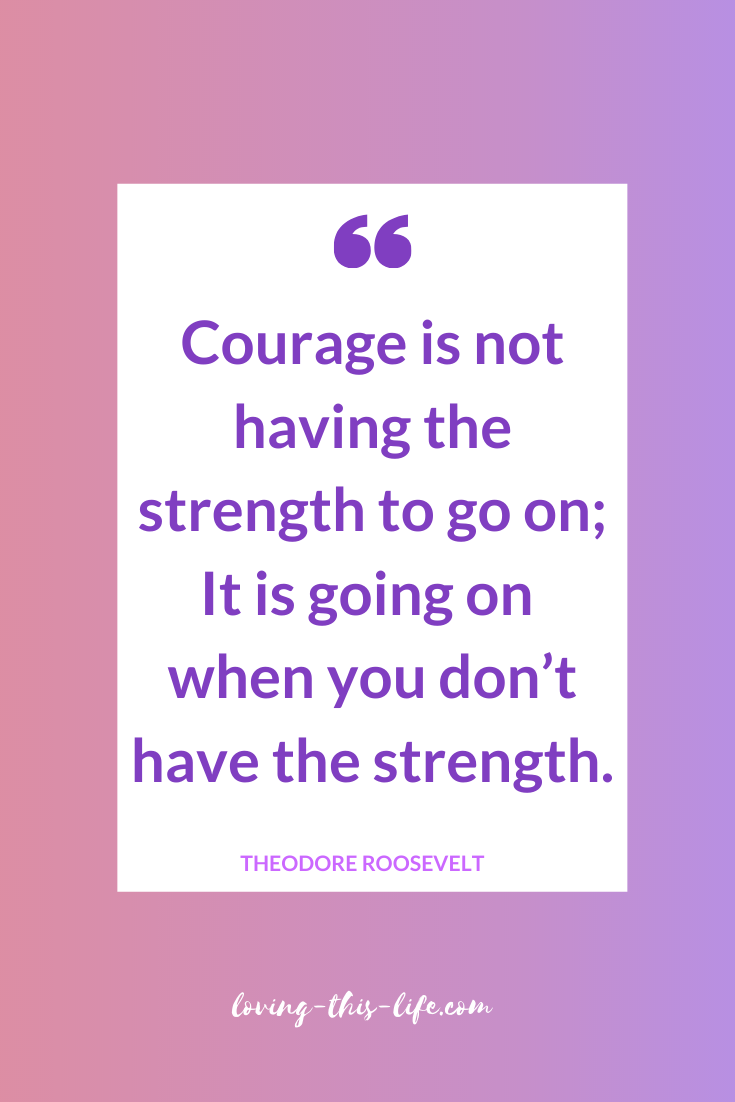
“Courage is not having the strength to go on; It is going on when you don’t have the strength.”

MY CHRONIC ILLNESS:  5 THINGS I WISH OTHERS KNEW

MY CHRONIC ILLNESS: 5 THINGS I WISH OTHERS KNEW

Do you wish that your family and friends knew more about your chronic illness and how it affects your life? I do!

The truth is, they see the results of chronic illness in my behaviour; through my interactions with them and the emotions that invariably come to the surface.

What they see though, doesn’t show the whole picture of what I’m feeling internally; what I try to hide from others; and the energy spent trying to “push through” and live as normal a life as possible.

5 things that I wish others took the time to understand:

1.  I CAN’T ALWAYS TELL YOU EXACTLY WHAT I’M FEELING / MY WORDS DON’T ALWAYS GIVE THE WHOLE PICTURE OF MY CHRONIC ILLNESS: This evening as I was sharing some of my day with my husband, he reflected back to me: “do you know that you’ve said at least six times how very tired you are?”  It wasn’t a criticism; he was just mirroring back to me what he was seeing and hearing.

When I stopped and thought about what I was trying to convey – it was true I was tired, but I was mostly overwhelmed because all afternoon I couldn’t get my head around what I was trying to do.  Each time I thought I had a handle on it, the thoughts would disappear, and I’d find it almost impossible to pick it up again.

It’s called brain fog and it is one of the most annoying and debilitating symptoms of my Fibromyalgia.  I found this article helpful to describe brain fog:  Brain Fog and Fibromyalgia

I find it one of the scariest.  My mother passed away two months ago.  The last eight years of her life were lived with dementia – a truly horrible illness.

When I’m in the midst of brain fog and I can’t hold my thoughts together, I often fear where I’m headed and whether dementia is a part of my future, too.

(This isn’t based on medical research or anything like it, but I’m sure if you’ve experienced brain fog, you’ve possibly wondered, like me, whether you’re losing a part of your mind.)

2.  EVEN THOUGH I CAN’T COME TO LOTS OF PARTIES OR OUTINGS, I STILL APPRECIATE BEING ASKED: It’s a horrible feeling to feel like you’re left out of everything and that people don’t even think about including you in things.  Okay, it may be true, I may not be able to do 90% of activities, and I say “no” more than “yes” when asked, but I do try and work out what I can and can’t do.  Every week is a carefully juggled programme.  For example, if I’m working… I know I can’t go out at night.  Or if I do, that it will wipe me out physically for the next couple of days.  For others this may be different.  You may be able to do more or less than me.  We’re all unique and I’ve learnt to be thankful for what I can do.

3.  I GREATLY APPRECIATE HAVING PEOPLE STAY IN TOUCH THROUGH A VARIETY OF WAYS: I absolutely love receiving gifts from others. It doesn’t have to be an actual present, it could just be a note or a phone call from a friend, saying that they’re thinking of me and go on to share something special about our friendship.  This means the world to me.

It brings a ray of hope into my day…that I haven’t been forgotten even though I’m not physically present at events.

4.  WORDS DON’T EXPRESS WHAT FIBROMYALGIA FEELS LIKE FOR ME: I’ve tried different analogies over the years to explain how it feels to live with Fibromyalgia, but this isn’t easy to do, as each day can be very different.

Some days, I just can’t get moving.  My Fibromyalgia is more about fatigue with muscle aching.  I don’t have the severe pain that others do.  The fatigue is bad enough.

Every day I get up and start with a shower.  By the time I’ve had a shower, got dressed, put my make-up on and done my hair – I am exhausted.  I honestly feel like I could go back to bed.  Oh, and I truly wish, I could wake up one morning feeling just a little bit refreshed from sleep.  But that disappeared a long time ago. 

So, the start of each day isn’t very positive.  I just hope that my body will loosen up a little and start moving without me having to think through every movement.

5.  I DON’T WANT SYMPATHY: I try not to be rude to people who don’t know me, but I really hate sympathy.  It often comes in one or two forms.  “Oh, I’m so sorry.  How ever do you manage?”.  Or “Oh, I knew someone who had…such and such an illness.  They had no end of trouble, etc, etc, etc.”

It really doesn’t help to hear from someone else about others struggles with illness.  I don’t feel like they are present with me and want to hear about my life.  It feels like they just want to “dump” some useful information they know about someone else.

I truly value having others share their own stories with me, that’s not the problem.  In fact, that’s usually a joy and are special moments in time.

But when others are trying to match up symptoms with people, etc, it usually ends up being exhausting as you listen to stories of people you don’t know and who aren’t present.

I don’t mean to sound ungrateful. 

I know that often people share these things with the best of intentions – to try and connect, but unfortunately, sympathy doesn’t help.

Empathy is another thing all together.  Having others want to know what life is like and spend time to actively listen to my world, is very precious.

Sometimes, it’s just easier to stay quiet, to listen outwardly, but inwardly withdraw.  It takes energy to keep everything inside, when you long for others to understand.  It also takes a lot of energy to try and share your life with others.

Finally:

Over the years I’ve developed friendships where I can share what is going on for me and this is where I know it’s safe for me to tell them what my life is currently like with Fibromyalgia.  I also enjoy doing the same for them – giving them my space and time to share their world.

These five things that I wish others understood about my life has developed over a long period of time (I’ve had Fibromyalgia for over 20 years.).  You may find this blog helpful: Fibromyalgia – what you need to know! 

Complaining about my life gets me no-where, and that wasn’t my intention here.  I hope that by sharing these things others might be able to articulate what they need in their life to help them move forward.  If we can’t find the words to tell others, we can’t expect them to understand.

Sometimes, when you’re with someone close to you who wants to understand, just starting the conversation about what your world is like, means that together you can discover the words to describe it.  It’s a special gift to have friends who help you find clarity about your own life.  It also takes courage.

There’s a wonderful quote by Theodore Roosevelt that I love.

 “Courage is not having the strength to go on; it is going on when you don’t have the strength”


Fibromyalgia…what you need to know now.

Fibromyalgia…what you need to know now.

How does anyone respond to a diagnosis of Fibromyalgia? 

Let’s be honest, most of us probably haven’t heard much about it before we started to feel symptoms that fit the box of Fibromyalgia.

It can be a long journey to finally reach a diagnosis of Fibromyalgia.  The journey often consists of some of the following:

  • developing a range of symptoms:
    • widespread as well as quite specific points of pain;
    • aching limbs;
    • brain fog (difficulty in thinking clearly);
    • struggling to do normal, everyday activities that you used to do all the time.
    • Interrupted sleep and waking up feeling unrefreshed.
  • numerous visits to Doctors and Specialists – some who will seem sceptical of your symptoms.
  • Struggling to describe to your family and friends so that they can understand what is going on within you.  The symptoms of Fibromyalgia aren’t visible to others.

This list is just the beginning – it certainly isn’t an exhaustive list. 

As you start to explore what this illness Fibromyalgia is all about, you’ll discover that over 5 million American’s are diagnosed with it.  In Australia 2-5% of the population has it.  You’re not alone, but you may often feel like you are.

Most articles that you will read on Fibromyalgia will state:

  • That fibromyalgia is difficult to diagnosis;
  • That the cause of Fibromyalgia isn’t known;
  • There isn’t a known cure for Fibromyalgia.

As a result, finding information about this chronic illness and how to live with it, can take a while.  

I’ve discovered that the best places to learn more about Fibromyalgia are from those who live with it every day.   They are the ones who have faced the effects of it and learnt how to adjust their everyday life to manage it. 

Exercise is said to help sufferers of Fibromyalgia but, it can also cause further fatigue and pain.   Although, if we allow ourselves to live a sedentary life, we will end up having other conditions to have to worry about – obesity, diabetes, etc. 

I don’t state these things to frustrate anyone.  The truth is that the reality of living with Fibromyalgia is confusing and frustrating.  It’s a challenge to make sense out of the various symptoms of this chronic illness.  Then you need to work out how to live your life with them.  It’s a challenge. 

The reason I write about Fibromyalgia is because I’ve lived with it for 20+ years. 

To be totally honest, there are still some days where I don’t know what the best thing to do is.  I may feel tired, with aching limbs and not be able to think clearly through the brain fog.  Maybe I should push through this and ignore how I’m feeling? Or maybe I should slow down and give myself some time to rest and recharge. 

Obviously, we must look at the big picture.  If all we do is “pushing through” then we are setting ourselves up to fall and, most likely, end up in bed for a week or more. 

But if we’ve managed our days well and we’re not feeling too bad, maybe it’s okay to push through and do something that’s important to us. 

Just working through this kind of thing in your head is exhausting and frustrating!

It’s why we need to connect with others who are going through a similar situation.  We need to hear how others manage their life, so we can get some new ideas of how to move forward.  It’s refreshing to relate to others who understand what you’re going through. 

Remember that you’re not alone.  Many others are going through very similar situations as you are. 

If you don’t have Fibromyalgia, but know of others that do, then the best thing you can do is be a willing listener; to help when you can, but most of all be a friend.