01
What can you do to Save The Environment?

What can you do to Save The Environment?

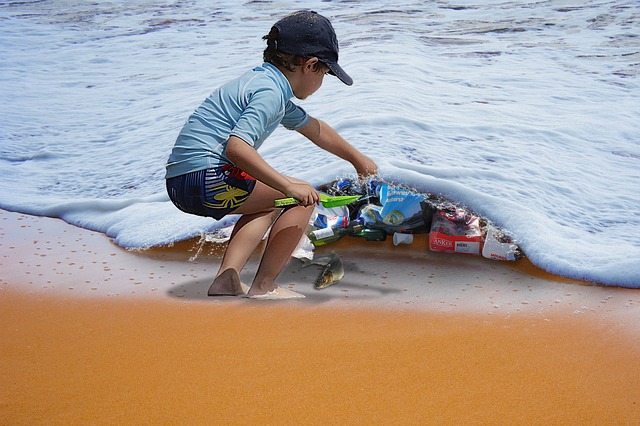
How will we save the environment?  The problem is real.  We don’t need to go very far to see it, but the big question is “what can you do about it?”

I’m not saying that it’s all your problem and you alone have to fix it, but the truth is that every one of us needs to be accountable for the way we live our lives.  Are we a part of the problem in the way we live?

We have to be honest with ourselves.  As an individual on planet earth, we have the responsibility to maintain a lifestyle that does the least damage to our planet.
Where are you in the climate change / save the environment debates?  Your voice matters.  


Do you:
  • Let all the talk about climate change and the environment wash over you?  Put it in the too hard basket to do anything about. What can I do to change anything?
  • Feel uncomfortable about the current state of the environment but feel powerless to do anything about it?
  • Get angry and frustrated when you see big companies abusing the planet with their pollution, etc or taking all our natural resources and making loads of money from it? They’re the ones who need to do something.  I can’t change anything.
  • Know that it’s time for you to do something but have no idea where to start.
  • Already have an active plan for limiting your footprint on the planet and are working hard to explain to others what they can do?
  • Or do you have your own, very unique category that you fit into?
In looking at Loving This Life and thinking about what I want it to stand for, I realized that as a part of loving this life we need to care for the planet that provides us with all we need to survive! 
So, you will find more information, resources and ideas to start discussion and raise awareness of what we can do to save the environment. We’ll also point you to some products that we think are worth trying to help to you to minimize your footprint. 
START SIMPLY OR SIMPLY START TO SAVE THE PLANET
Do you let all the talk about “saving the environment” or doing something about “climate change” just wash over you and brush it off into the too hard basket? 

From time to time you will find Affiliate links on our site.  These link to products that we like and recommend.  We do get a small commission from the seller if you click on this and buy, but this doesn’t affect your sale price at all.  Read more in our Disclaimer at the bottom of the page.  
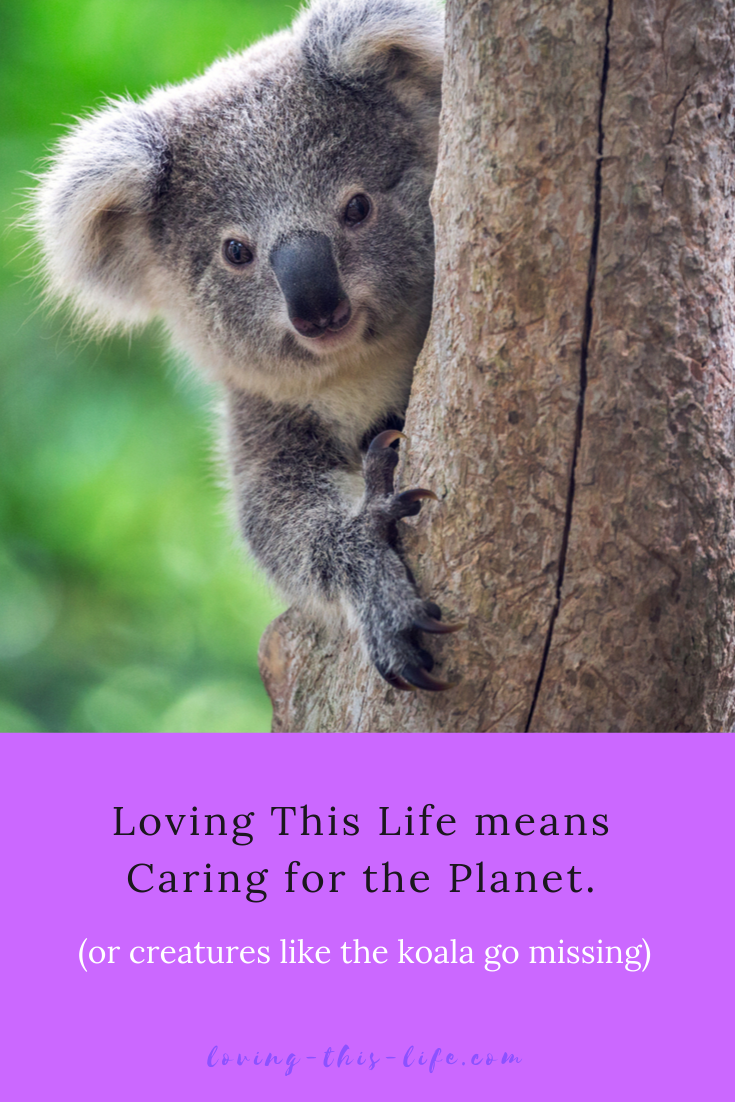
I know I have for too long.  I’ve tried over the years to “do my bit” but the truth is we’re all going to have to work harder to help our planet survive. 
I live in Australia where one of our greatest national treasures, the great barrier reef, is under threat.  Many of our treasured species are under threat of being endangered – e.g. the koala.  Check it out here:  https://www.wwf.org.au/what-we-do/species/koala#gs.9hhvn3
So, where do we start to make a difference?
I’m no expert, but these are some of the things that I’ve done to get started…
    1. Collect all the plastic packaging we use in a week and take it back to my supermarket where they have large bins to recycle plastic.
    2. Stop using plastic bags while shopping. It takes some getting used to – remembering to take your shopping bags with you, but it’s worth it.  There are numerous bags when you stop and think about it.  Bags to carry all your shopping; bags to put your produce into (instead of using their plastic bags); bags to carry your purchases from general shops (clothing; shoes; etc.)  But remember, use up what you already have.  If you can’t recycle any plastic bags that you have then use them over and over again. 
    3. Buy products in bulk. I started buying the double length toilet paper and buy this in bulk.  It saves on some of the plastic they wrap them in.
    4. Stop buying water in plastic bottles. Buy a couple of environmentally friendly water bottles and refill these from your tap.  I have several.   One next to me when sleeping, working, etc. and a smaller one to fit in my bag while walking around.
    5. Invest in a good travel mug for your tea and coffee and use this instead of the disposable mugs.
    6. Check out the plastic containers you use for storage, etc. – again, don’t throw them out and buy more environmentally friendly ones.  But, when you need to get new ones, why not replace them with long lasting products that don’t harm the planet.
    7. I’ve stopped buying face wipes to cleanse my face. I got into the habit of using one of these every day without thinking how much this adds up to!  Instead just use a cleanser with water or, like me, you can invest in something like Face halo makeup removers.  They’re not cheap, but you can use them over and over again as they can be washed in your washing machine. 
These are all pretty obvious things that we still have to choose to do.  What do you do to save the environment? I love to hear what others do to save the planet and am inspired to try these ideas as well.  
Let’s share any ideas you have or what you already do in the comment section.  Your ideas will help others to find ways to reduce waste.  It’s a great way to work together and encourage each other to do our best to protect our environment. 
Do You Want to Know the Truth About Your Life?

Do You Want to Know the Truth About Your Life?

I am very thankful that life is so much more than what I expect it to be.

The truth about my life though, is that I often limit it to what I think I can handle in any moment.  My limitations include having a chronic illness which results in fatigue, pain and brain fog.  All good reasons to slow down and take life easy.

But I’m realizing more and more that without these limitations, I probably wouldn’t be where I am right now.   I have to say that I love my life and where it’s headed.  It’s scary, but it’s exciting and life-giving.

What about you?  What is the truth about your life right now?  Are you stuck somewhere, or are you moving forward into a future you want, one step at a time? Wherever you are, remember that you can make choices about your life.  In fact, you are the only one who can.

I have had times in my life when I’ve allowed myself to be frustrated by various limitations that stifle me and stop me from doing what I want to do.  But when I stop and look at the things that are holding me up, they often prove to be opportunities for me to grow and ultimately help me to move into a future that I love.

One of the tools that I find so helpful when I’m in this space, is to read others’ words about life and their perspective on how to live it.  We need to be careful who we listen to, but when you see these words coming from a life that hasn’t been easy; that has had challenges to overcome and yet they’ve encouraged and helped so many people, I know that’s a life I want to understand.

I love these quotes that pop up on Social Media that ask questions about who you are and why you do the things that you do.  They make me stop and think about where I’m headed and where do I want to be down the track. I’ve chosen ten quotes that speak to me.  Take some time to reflect on these words, from some very wise people who have certainly lived a challenging life and yet overcame so much.

TEN QUOTES TO REFLECT ON: 


“May your choices reflect your hopes, not your fears.”  Nelson Mandela


“Do not judge me by my successes, judge me by how many times I fell down and got back up again.” Nelson Mandela


“Spread love everywhere you go.  Let no one ever come to you without leaving happier.”  Mother Teresa.


“We shall never know all the good that a simple smile can do.”  Mother Teresa


“If you judge people you have no time to love them.”  Mother Teresa


“A ship is always safe at shore but that is not what it’s built for.”  Albert Einstein


“Stay away from negative people.  They have a problem for every solution.”  Albert Einstein


“Once we accept our limits, we go beyond them.” Albert Einstein


“When one door closes another opens; but we often look so long and so regretfully upon the closed door that we do not see the one that has opened for us.” Alexander Graham Bell


“You must be the change you wish to see in the world.” Mahatma Gandhi.

How Can I Set Goals while Living with a Chronic Illness?

How Can I Set Goals while Living with a Chronic Illness?

Do you live with a chronic illness and struggle to set goals and – actually achieve them. 

Do you get nervous thinking about setting goals and moving forward?  

There can be numerous reasons for this, and it might be very different for you and someone else you know with the same chronic illness.  But what I do know is that a lot of people struggle with this same issue. So, what might be stopping you from setting goals?

  1. HISTORY: in the past you may have failed any time that you have tried to achieve something.  It may have been as simple as going out to a party.  You accepted the invitation, worked towards going, but come time to get ready to go, you were exhausted, your body was aching, and you weren’t up to partying.This can leave a lot of unhelpful residue to push through.  It’s true that we don’t know what any of us will be like on the day we want to do something.  But when you have a history of having to say “no” to things at the last minute because you’re feeling weak and in pain, it puts you off saying “yes” in the first place!
  2. FEELING ON THE EDGE OF THINGS WHEN YOU DO PARTICIPATE: I know for me there have been times when I pushed through and went to a party or something I’d been asked to go to, only to feel like I was on the edge of things.  The noise around me echoed in my head which made it even harder to focus on who I was listening to at the time.  Others who were the “life of the party” were floating around from person to person having a wonderful time, but I could only watch on and wish I just had a little bit of their energy. 
  3. COMPARING MY LIFE TO OTHERS AND COMING UP SHORT: Have you ever wanted to do something and then you see others chasing their dreams and actually achieving them with seemingly endless energy?  How are you left feeling?  I often end up feeling deflated as I watch on from the sidelines, once again. There was hope for a little while that I might be able to achieve something, but then I’ve looked around at others and seen how they’re really living life and making something of themselves.  I’m left feeling like I may as well give up!  I don’t have any of their drive and energy to make things happen, so what’s the point?  (Don’t give up yet though.  We can move forward…)  
  4. FEAR OF FAILING: What if I actually do put all my energy into something and end up being no good at it?  What if I discover that I’m hopeless at it and everyone laughs at me or thinks I’m crazy for trying?   Fear of failing is a huge hurdle for many of us to climb over and let’s be honest, there’s no guarantees about anything.  But the important thing is learning more about yourself in the process.  These four things can have a powerful hold of our lives if we allow them to.  You may even have another point or two to add to the list.  Regardless of our past and of our fears, we can move forward in our lives even while living with a chronic illness.   

Here are 4 steps you can make to start you off on the process of living a life you love. 

  1. The first and most important step you need to work on is being realistic about where you are at in your life right now.

So often, we set ridiculous goals for ourselves out of sheer frustration at being limited in what we can do. But, if you can take a few moments to step back and look at how you are currently and, in the light of this, try to name a few things that you would love to work towards doing, you may find that these goals are achievable for you.  It’s true that these goals may not be the “big, exciting things” that you’ve been wanting to do forever but have always felt out of your reach. 

Can you see though, that if you can achieve these smaller goals, (which are realistic with the limitations of your chronic illness); you will be able to move forward, a step at a time towards other goals?

  1. The second step is to write down your goal and then work your way backwards listing all the steps you need to take to reach your goal.

It doesn’t matter how small the steps seem to be, write them down.  Believe me, you’ll have a lot of enjoyment when you can tick off each step one by one as you complete them.  I often do this by brainstorming and writing everything down on a piece of paper in no particular order.  Then I try to put it into an order and can start to see things that might be missing. You’ve probably come across the acronym SMART in setting your goals.  The acronym stands for:       

Specific (who/what/where/when/why)

Measurable (what measure will you use to know you’ve achieved it?)

Achievable (is it achievable for you at present?)

Relevant (is it relevant to you right now?)

Timely (When will it be achieved?) If you work towards making your goal using these things, you will find it much more achievable.  I found this article helpful in explaining the SMART acronym:  https://www.mindtools.com/pages/article/smart-goals.htm So, start small, but with something you would like to achieve and set yourself realistic boundaries around it.  It’s important to be able to complete this and be happy with your results. 

  1. The third step is to undertake each step towards your goal.

As I said previously, enjoy taking the time to tick off each step as you complete it.  You have taken another step to achieving this goal.  Well done!  Don’t downplay the significance of this.  As you can move forward step by step towards this goal, belief can start to rise that maybe you can work towards some other goals too.   If you find that your time frame wasn’t very realistic, that’s okay, re-work it and start moving forward again.  This is a process and it’s not just about reaching your goal.  It’s also about learning to set realistic goals and taking one step at a time to achieve them.  You may find that you’re better at doing some parts of the goal than others.  That’s okay.  You’ve learnt something new about yourself.  Maybe you can ask someone for some help in this area.  Or you can do some research on the internet?  (It’s amazing how many You Tube videos there are on just about every subject!) 

  1. Finally, when you’ve reached your Goal:

It’s time to celebrate!  Well done!  How does it feel knowing that you’ve completed your goal?  Don’t downplay this.  (Sure, it may not have been a huge goal – that wasn’t the point of the exercise.  This is about making sure you do achieve a goal. Can you see how important this is for all of us to achieve?) How did you go achieving your goal?  What are the things that you learnt about yourself in the process?  What are some of the things you want to remember for the next time you work towards a goal? I know this may feel like small steps, but never underestimate the importance of building this foundation slowly and steadily.  What would you like to set as your next goal?  I’d love to hear how you went with this.  Leave a note in the comments section and encourage others to have a go too. 


Living with Grief Due to Your Fibromyalgia.

Living with Grief Due to Your Fibromyalgia.

Just when you think you’ve started to work out how to live with this massive curve ball in your life called Fibromyalgia, something else comes along that you have to deal with.   Its name is grief and it will more than likely have a broad affect across your life.

I share this, not to discourage you, but to help you be prepared and not so knocked around by its effects.  I speak as someone who has lived with grief for periods in my life.

“Why grief?” you may ask.  Well, in all honesty and bluntness, why not!  Think about everything that has changed in your life due to the onset of Fibromyalgia.  Every one of us has different symptoms and varying ways to respond to them.  But what all Fibromyalgia sufferers have in common is that everyone has had to change living their lives the way they used to due to the pain and/or fatigue that they now experience. For some, the loss is enormous.  The pain and/or fatigue cripples you and means that you have to let go of many of the things that were routine in your life before.  Going out after work with friends; playing sport; partying; working fulltime; doing fun, exhausting things with your kids; the list of things we can no longer manage is long. Is it any wonder that grief also enters your life?  There has been a lot to let go of, to change, and to embrace since your diagnosis of Fibromyalgia. Everyone will find differences in the way the grief emerges.  Below is a list of possible times when grief can hit:

  • When you are diagnosed:  It’s normal to have a sense of relief when you have a name to what has been going on in your body.  But at the same time, you are told that you will live with this condition for the rest of your life.


  • When you have to say “no” to doing things:  It’s often painful and difficult to have to stop doing so many of the things that have made up your life.  As you realize that you can no longer do these things, it’s natural to have grief rise within you.  There is an enormous sense of loss for the life that used to be yours.


  • Living a “reduced” life:  It often takes time to discover and adjust to a lifestyle that your body can manage.  This time often causes frustration and grief as you recognise this isn’t how you expected to live life.


  • Realizing you are powerless to change things: One of the hardest things to realize is that you can’t change the diagnosis of Fibromyalgia.  You can’t change the symptoms that you experience every day.  You have to accept them and the limitations that come with them.

All of the above times in a Fibromyalgia person’s life are significant and often painful.   Some people find that grief can follow quickly.  For others it’s a slower process. Whenever it comes, it’s important to do the following 4 things:

  1. Acknowledge the loss that you’ve experienced.

It is so important to acknowledge what you have been through and how it has left you feeling.

  1. Put into words what is happening for you.  Being able to “name” and express the different things that happen in your life is helpful for several reasons:  Firstly,  to be able to find the words – a name for what is changing in your life.  Secondly, having the words is helpful as you try and explain to those close to you what you are  feeling, etc. It will help you and them, if you can clearly describe what’s happening for you  physically & emotionally.  It may take awhile for you to find the words to do this.  Journaling each day, even just a little, can help you in this process.  
  1. Find someone to talk to and share your feelings with.

This can be someone you’re close to and if you have a partner, you will want to keep them in touch with what’s happening for you.  But often, it’s good to have someone that’s a little distant to you, to be able to “offload” to.  A counsellor, or mentor would be ideal.  

  1. Finally, remember that even with all of the change and limitations, you are still YOU AND YOU HAVE SOMETHING IMPORTANT TO CONTRIBUTE TO THIS LIFE.

I know that this can feel impossible.  You feel as if you have lost so much due to your illness, but the truth is that you still have so much to do, to be and to offer to others in this life.    Your feelings may tell you otherwise, but remember, sometimes your feelings don’t tell you the whole picture.  It’s been over 20 years since I was diagnosed with Fibromyalgia.  I have found grief to come and go throughout this time.  When it hits, speaking with a counsellor has been very helpful and I’ve been surprized how quickly I can move through it. I didn’t always seek this help out quickly in the early years and I regret that, because as a result, it took me longer to work through the feelings and find a balance in my life. The important thing for me, and I believe it’s true for others, is to not let the grief settle and become a part of your day to day life.  Seek, and ask for help.  There isn’t any sense of failure in doing this.  It’s the best thing you can possibly do.  The changes that have come into your life are unsettling and you will sometimes need some “outside” help to know how to adjust to your new life. You do have a new life.  It may look very different to what you knew before and even what you hoped it to be.  But it is your life and you will learn how to live it.  Be patient with yourself.  You need to give yourself some time and find the help you need to live it effectively. You may be surprized by some of the new, creative things that become a part of your new life.

Who do you want to be – even with Fibromyalgia / Chronic Illness?

Who do you want to be – even with Fibromyalgia / Chronic Illness?

One of the first things you think about when you’ve been diagnosed with fibromyalgia, or any chronic illness, is how is this going to affect your life? Initially, it can feel like you have no choices at all.  The pain and/or fatigue overtakes your life and you can’t do anything that you used to do.

Changes need to be made in your life to manage the various symptoms that can be overwhelming at times.  It’s a time of adjusting as you work out what you need to let go of, and what you need to do to help you have some quality of life.  Each person needs to allow themselves the time to go through this process.

As well as this, you need to choose who you want to be as a person.

Here are five ways you can choose to live your life:

  1. As a Grouch. Now let me be honest, we all have days when all we want is to tell somebody how we are feeling.  This isn’t what the Grouch is. The Grouch wants to tell people over and over and over again how lousy they feel.  They don’t want to be left alone.   (That means they would have to listen to themselves whinge!).  They want to keep on saying how unfair life is; how much pain they have; and how weak they feel.  They don’t want to let go of these feelings.  In a strange way there is something normal about the place they are in.  At least they know what they feel, and they have a need to keep on telling others about it.

Another way you can choose to live your life is:

  1. In Denial – Let me tell you right up front, this one has a very short life-span. It’s just not possible to ignore all of the symptoms and go on living life to the fullest.  Unless you’re Superwoman or Iron Man – you will “crash” sometime.

The following quote from the Mayo Clinic Staff describes when being in denial is okay: “Denial is a coping mechanism that gives you time to adjust to distressing situations — but staying in denial can interfere with treatment or your ability to tackle challenges.” Denial has to only have a short life span, otherwise it has negative consequences and stops you from moving forward. Here are 3 different levels of being in denial:

  • Total denial – where you don’t acknowledge anything about what is happening for you physically, emotionally and spiritually. This is a dangerous and unhealthy place to stay.  At some point you need to accept your current situation, so you can move on and live your life.
  • Partial denial – where you own that you have limitations, but don’t like to let them dictate what your life looks like. This sounds okay, doesn’t it?  Isn’t it better to try and keep on living life the way you used to do? Only if you want to “crash and burn” somewhere down the track.

There are often times when we all live in partial denial, especially when we don’t want to have to face something about ourselves.  Again, it can be seen as a time of adjustment, but we need to move forward with our lives, we need to accept our lives without filters.

  • Partial acceptance – this is starting to look a little healthier than the other two. At least with partial acceptance, we are naming and owning that part of our life has changed.  We may accept that we have a chronic illness; or that we have to “slow down” a little, etc.

But we still don’t own that our lives have changed, and life may never look the same as it was before.

All of these ways of living in denial may occur for a short time when you first receive your diagnosis. That’s normal.  But it’s not normal to stay in any of these phases.  You need to look beyond and move forward.

3.  As a Manipulator – is another way to choose how you live your life with chronic illness. (It sounds almost evil doesn’t it?)  In this stage you acknowledge some or all of your illness and use it to help you get out of things that you don’t like to do!  Or maybe, get things that you want.  You don’t have any intention of working out how to best live your life and work around your limitations.  You just use your illness when it suits you.

Not a particularly healthy way to live your life.  It also won’t help you to keep your friends.  They will see through you and disappear quickly.

  1. Seeking Sympathy – this one could come under the Manipulator, but I think it deserves a category of its own.

I’m sure we’ve all comes across somebody who lives with a “woe is me” attitude and just wants to have everybody’s sympathy.  “Poor me.  Look at what I have to live with.  Aren’t I amazing the way I live with chronic illness?”  I’m sure you get the gist of it.

To be totally honest with you, I don’t understand why anyone would ever want to live their life seeking sympathy.  But people do.  They want to have that experience of being the centre of attention with people acknowledging how hard life must be, etc.  For me, I would find this draining.  I don’t like people mothering me – and this is what seeking sympathy can partly be about.  “You poor thing, etc”

But there are plenty of people around who live in this state of seeking sympathy.  It isn’t healthy at all and I encourage you to think if there is any part of your life where you do seek sympathy and how you can change your behaviour to something healthier and life giving.

  1. You can also choose to accept your life and move forward.

It is very normal to have moments where you live some of the above-mentioned ways – especially when you first receive your diagnosis of your chronic illness and are trying to work out how to live with it.  But it isn’t healthy to stay stuck in any of them.

For many, the journey to receiving a diagnosis has been a long and tedious one.  You’ve often felt misunderstood; judged; seen as having symptoms “all in the head”; alone; scared, to name a few…

When you finally have a name for what you live with, it can come as a shock.

You’ve been pushing so hard just to find answers to what’s wrong with you, you almost don’t believe it when you do have a diagnosis. 

This can be quite a confusing time.  To start with there can be more questions than answers:

      • What does having this illness mean?
      • How am I supposed to live with this?
      • Is there any help I can get?
      • Who can tell me what this condition actually is and does to me?
      • What is normal for me now? 

It’s very normal to have lots of questions.

Your challenge will be to have enough patience with yourself and others as you try and seek answers.  You may not even know yet what the questions are that you need to ask!

That’s okay.  It’s quite normal to have lots of questions at this time.  We need to give ourselves time to work out what our next steps are.

When I was told that I have Fibromyalgia, the pain specialist told me two things.  Firstly, that it wouldn’t kill me and secondly, that there’s no cure for it and I’ll have it for the rest of my life.

That’s quite a curve ball that I and many, many others have received, when diagnosed with a chronic illness.   It’s no wonder that it upends our life for a period of time.

But one of the most important things that I have learnt is that I can still choose how I will live my life.

Of course, I have limitations due to my illness, but there are still many ways that I can choose how I live my life at this time.

Victor Frankl states: “When we are no longer able to change a situation, we are challenged to change ourselves.”

This is the challenge we hit with a diagnosis, isn’t it?  We can’t change that we have Fibromyalgia (or your conditions name), but we can still choose how to live our life and who we want to become.

When we accept this, we can move on into the life that still awaits us.  Yes, it will look different to what was expected it to be before our illness.

But it is still life – your life and it’s yours to grab hold of and shape in your own unique way. 

I’ve mentioned before in my blog about my brother-in-law who passed away a few years ago from Motor Neurons Disease.  (If you don’t know what this illness is click here for more info https://m.mndaust.asn.au/Get-informed/What-is-MND )

Even when he couldn’t walk anymore; couldn’t speak; had limited movement; couldn’t do anything that he used to love to do, was literally wasting away – he could smile. Whenever someone walked into the room, he smiled, and the room would light up.  (It wasn’t an artificial smile – it was genuine and everyone on the receiving end of that smile felt the warm glow from it.)

My brother in law could have just as easily greeted each person with a frown, ignored them or shown no warmth at all – and who would have blamed him!  But he chose to give all those who entered his life at this time a smile.  I’m not sure I’ve ever received such a precious gift.

He has certainly challenged me to work at how I live my life.

How will you choose to live your life?